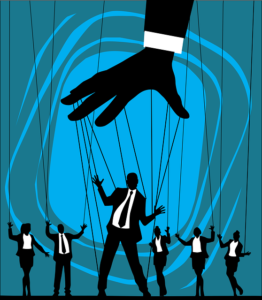
 Governing is not merely the administration of resources; it is the attempt to direct the human will—a task that has proven to be the most complex in the history of creation. From the courts of antiquity to modern structures, the exercise of power has faced an insurmountable wall: the intimacy of the human spirit.
A Universal Challenge.
There is no creature on Earth more difficult to direct than the human being. This tendency toward divergence is not a failure of the modern system, but an intrinsic characteristic. Even in the theological account of the Universal Kingdom, the Creator Himself faced rebellion and discord. If schism emerged within the realm of the Absolute, what hope for total control can earthly rulers have?
History teaches us that there is no corner of the world where resistance has not sprouted in some form. The human being possesses a spark of autonomy that defies any attempt at forced homogenization.
The Recourse of Divinization.
When governments enter crisis and see their dominance threatened, they often resort to an ancient strategy: the sacralization of power. Pagan kings, especially as they witnessed the twilight of their domains, understood that physical fear was not enough; they required control over the soul.
In secular antiquity, it was common to fabricate myths where the king was “adopted” by the gods. This act was not a mere religious whim, but a precise political tool:
-
Divinization: The ruler ceased to be a mortal peer and became an extension of the sacred.
-
The Edict and the Image: Monuments were erected and decrees issued demanding public worship.
-
The Paradigm of Submission: These gestures created a social pressure so strong that even those who knew the myth was a lie ended up surrendering to the power structure in order to survive.
The Evolution of Control.
Following the victory of monotheism in the most influential parts of the world, primarily through Christianity, rulers hit a wall: they could no longer directly self-deify without being branded as blasphemers. In response, earthly power adopted a more subtle but equally dangerous modality: not seeking to be God, but manipulating the religion built around Him.
In modern times, this strategy consists of “hijacking” sacred language to validate oneself. It is no longer about building a golden statue, but about attempting to make the religious structure serve the interests of the throne. The ruler seeks to present himself as the sole interpreter of the divine will or the indispensable protector of the faith, thus ensuring the subject feels that opposing political power is, in some way, betraying God. This is the ultimate assault on intimacy: using an individual’s own faith to shackle their will.
“For those who truly interact with God, any substitution of His figure by a political deity or a false expectation is, in essence, a grave betrayal: idolatry.”
Liberty as an Act of Faithfulness.
For the individual who maintains an authentic relationship with the transcendent, politics regains its legitimate place: that of a temporary and limited service. The true tragedy occurs when the ruler seeks to occupy the throne of the conscience.
History is a cycle of rulers attempting to penetrate human intimacy through religion or myth. However, the essence of monotheism reminds us that there is a part of us that belongs neither to the State, nor the king, nor the system, but solely to the Eternal.
Are we witnessing new forms of “divinization” in public discourse today? The answer to this question defines our true freedom.
Author: Liber Aguiar (based on lectures by G.K. Wilson regarding Daniel 3)
0 Comments